
Why Not Answering Your Phone Became Normal (And How It Saves You Money)
Your phone buzzes. The screen shows an unknown number. Your first instinct? Let it go to voicemail.
Welcome to 2025, where ignoring your phone isn’t rude—it’s smart financial self-defense.
Americans lost nearly $40 billion to phone scams last year alone. That’s billion with a “B.” Meanwhile, something interesting happened in living rooms and offices across the country. We all quietly agreed to stop answering calls from numbers we don’t recognize.
This isn’t antisocial behavior. It’s your wallet’s security system working perfectly.
The cultural shift makes sense. Scammers got sneakier, technology made Caller ID spoofing easier, and we adapted. Now, not picking up unknown calls has become as normal as locking your front door. Your instincts are protecting you from financial predators who want nothing more than to separate you from your hard-earned money.
Key Takeaways
- Phone scams target people of all ages, not just seniors
- Caller ID spoofing makes any number appear on your screen
- The “what if it’s important?” worry keeps people vulnerable
- Simple rule: legitimate callers expect to leave messages
- Your gut instinct to not answer is actually brilliant protection
- Unless the call is coming from someone in your phone’s Contacts list, just don’t answer it.
You Can’t Trust What You See on Your Screen
Here’s the uncomfortable truth: your caller ID lies.
It might be the name of your bank on the screen, but that doesn’t always mean it’s your bank calling you. Scammers can make any name or number appear on your phone through something called caller ID spoofing.
Think of spoofing as a digital costume. Criminals wear the mask of trusted organizations—your bank, the IRS, your local hospital—to trick you into picking up. They might even use your own area code to make the call seem local and familiar.
The technology behind this deception used to require expensive equipment and technical know-how. Not anymore. Today, scammers can spoof any phone number for pennies using basic internet calling services. They can literally make it look like your grandmother is calling while they’re sitting in a basement halfway across the world.
Neighbor spoofing has become especially common. Scammers use numbers with your same area code and prefix, banking on the fact that you’re more likely to answer a “local” call. Your brain sees the familiar digits and thinks, “Maybe it’s the school” or “Could be a local business.”
But it’s not. It’s someone hoping to steal your money wearing the digital mask of your neighborhood.
The bottom line? That trustworthy number on your screen means absolutely nothing. Scammers know you’re more likely to answer calls that look familiar, so they’ve made every call look familiar.
Trust your gut. Let it ring. Check your voicemail later.
The Warning Signs That Never Change
While scammers constantly evolve their stories, they can’t escape certain patterns. These red flags appear in every phone scam, regardless of whether they claim to be from Amazon, Medicare, or your “grandson in jail.”
Pressure to Act Immediately
Legitimate businesses give you time to think. Scammers don’t.
“You need to act now or lose this opportunity.” “Your account will be closed in 30 minutes.” “The police are on their way unless you pay immediately.”
Sound familiar? These high-pressure tactics work because they trigger your fight-or-flight response. When you’re panicked, you make poor decisions. Scammers know this and weaponize urgency against you.
Real companies understand that big financial decisions take time. Your bank won’t threaten to close your account during a five-minute phone call. The IRS won’t demand immediate payment to avoid arrest. Anyone pressuring you to decide right now is trying to scam you.
Requests for Personal Information
No legitimate organization calls you out of the blue asking for sensitive information.
They won’t ask for your Social Security number, account numbers, passwords, or PINs over the phone. Government agencies don’t call asking for this. In fact, they typically don’t call at all. The Social Security Administration, IRS, and Medicare communicate through official mail, not surprise phone calls.
If someone claims to need your information “for verification,” that’s your cue to hang up. Real companies already have your information in their systems. They called you, remember?
Unusual Payment Methods
This one’s simple: legitimate businesses don’t demand payment through gift cards, wire transfers, cryptocurrency, or ATM deposits.
Gift cards are for gifts, not for paying taxes or fees. Wire transfers can’t be reversed once sent. Cryptocurrency transactions are nearly impossible to trace. ATM deposits disappear into accounts you can’t identify.
Scammers love these payment methods for one reason: your money vanishes forever. Credit cards and checks can be disputed. Bank transfers can be traced. But once you buy iTunes gift cards and read the numbers over the phone, that money is gone.
Too Good to Be True Offers
“You’ve been specially selected!” “You’ve won a prize!” “Lower your credit card rates instantly!”
Legitimate companies don’t randomly select you for amazing deals. You haven’t won contests you never entered. And if lowering credit card rates was as simple as one phone call, everyone would have perfect rates already.
These offers prey on your natural desire for good news and easy solutions. But here’s the reality: companies that cold-call you with incredible deals are usually incredible liars.
Should I Answer Unknown Phone Calls? Here’s Why the Answer Is Usually No
This question keeps more people vulnerable to phone scams than any other factor. The nagging worry—”What if it’s something important?”—overrides common sense and opens wallets to criminals.
Let’s put this anxiety to rest with some facts.
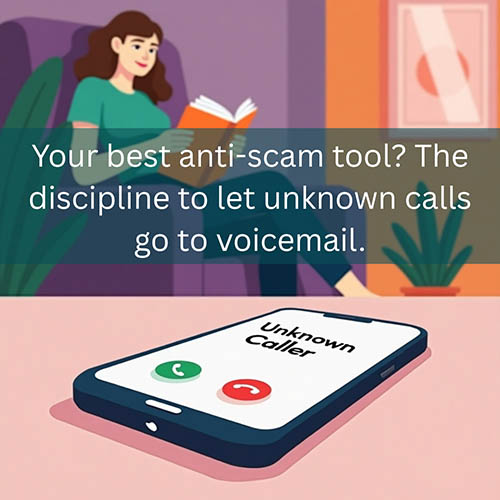
If Your Bank Is Calling for Something Important, They Will Leave a Message
Banks expect you to be cautious about unknown calls. They’ve adapted to the reality that smart customers don’t answer unrecognized numbers. If your bank needs to discuss something urgent with your account, they’ll leave a clear voicemail explaining who they are and asking you to call back.
More importantly, banks follow up important matters with written communication. You’ll get a letter, email, or secure message through your online banking portal. Phone calls from banks are typically friendly reminders or optional services, not emergencies that require immediate action.
Never Use Call-Back Numbers from Voicemails
If you receive a voicemail from your bank that includes a call-back number, use a trusted number instead. The number on the back of your debit card, your bank statements, or your online banking app—these are reliable.
Scammers leave convincing voicemails with callback numbers that connect to fake customer service lines. They’ll answer professionally, know basic information about you (purchased from data breaches), and build elaborate scenarios requiring immediate payment or information.
Always hang up and call the official number you can verify independently.
True Emergencies Don’t Come from Unknown Numbers
Real family emergencies come from known contacts—your relatives’ phones, hospitals with identifiable numbers, or authorities who show up in person. Your grandson doesn’t call from a random number claiming he’s been arrested. Hospitals don’t demand immediate payment over the phone to release family members.
Schools, doctors, and legitimate businesses you regularly deal with are already in your contacts or leave clear, professional voicemails you can verify.
The supposed “emergency” from an unknown number is designed to bypass your rational thinking and get you to act before verifying the story.
Should I Answer Unknown Phone Calls? The Simple Answer That Protects Your Money
The question that’s been bothering you has a surprisingly simple answer: No, you shouldn’t answer unknown phone calls.
Here’s why this straightforward strategy beats trying to outsmart scammers.
Scammers rely on your engagement to succeed. You can’t be scammed by a call you don’t take. It’s that simple. Every phone scam requires a conversation. Remove the conversation, eliminate the scam.
Let voicemail filter legitimate from fake calls. Real callers with legitimate business leave messages. Scammers rarely do because voicemails create evidence of their criminal activity and waste their time when they could be calling other potential victims.
When you answer a call, that tells scammers that yours is a “live” or “active” phone number and encourages them to keep trying. Worse yet, they sell your number to other scammers as part of a “hot list.” One answered call can result in dozens more scam attempts.
This approach eliminates 99% of phone scam risk. You cannot be tricked into giving information during a conversation that never happens.
Don’t miss important voicemails because your mailbox was full—delete old voicemail messages regularly. Your voicemail system only works as a filter if legitimate callers can actually leave messages.
Why trying to “beat them at their game” often backfires? Scammers are professionals. They practice their scripts, handle objections, and know psychological tricks you don’t. Engaging in verbal sparring matches with criminals rarely ends well for the amateur.
Situations Where You Might Pick Up (And How to Stay Safe)
Sometimes you’re expecting calls from unknown numbers—job interviews, medical appointments, deliveries, or service calls you’ve scheduled.
In these situations, you can answer more safely by following specific protocols.
Never give personal information immediately, even if the caller seems to know who you are. Scammers buy personal data from breaches and can sound surprisingly informed about your life.
Ask for their name, company, and call them back on an official number you can verify independently. Say something like: “I need to verify who you are. What’s your name and the main number for your company?” Then look up that company online and call their official number.
“I need to verify who you are” is always an acceptable response. Legitimate callers understand this caution. Scammers get frustrated and often hang up when you won’t immediately engage with their script.
Hang up immediately if they pressure you or refuse verification. Real businesses accommodate security-conscious customers. Scammers can’t afford to wait while you verify their stories because their stories don’t check out.
Simple Tech Solutions That Help
Technology can supplement your “don’t answer unknown calls” strategy, but these tools aren’t perfect replacements for good judgment.
Most smartphones have built-in call blocking features. iPhones can silence unknown callers automatically, sending them straight to voicemail. Android phones offer similar filtering options. These features work well for obvious spam but may miss sophisticated spoofed calls.
Many phone carriers provide spam filtering services that label suspicious calls before they reach you. Verizon Call Filter, T-Mobile Scam Shield, and AT&T Call Protect identify likely scam calls based on calling patterns and databases of reported numbers.
The National Do Not Call Registry helps reduce legitimate telemarketing calls but won’t stop scammers who ignore the law anyway. Still, registering your number means unexpected calls are more likely to be suspicious.
Third-party call blocking apps like Hiya, RoboKiller, and Nomorobo offer additional protection by maintaining databases of scam numbers and using algorithms to identify suspicious calling patterns.
Remember: these tools supplement your instincts, they don’t replace them. Even the best technology misses some scam calls and occasionally blocks legitimate ones.
Recovery Steps If You’ve Already Engaged with Scammers
If you’ve already talked to phone scammers, don’t panic. Quick action can minimize the damage.
Hang up immediately once you realize it’s a scam. Don’t worry about being rude—these people are trying to steal from you.
Contact your bank immediately if you gave any account information, even if it seemed harmless. Banks can monitor your accounts for suspicious activity and place fraud alerts that require verification for unusual transactions.
Never send money, even if you’ve already provided information. Scammers often follow up with more urgent requests once they know you’re willing to engage. The first scam call is frequently followed by “verification” calls, “refund” calls, or “urgent update” calls.
Report the incident to the Federal Trade Commission at reportfraud.ftc.gov and to your local police if you lost money. These reports help authorities track scam patterns and sometimes recover funds.
Monitor all your accounts closely for weeks after the incident. Check bank statements, credit reports, and any accounts you might have mentioned during the call.
Change passwords if you shared any login information. Assume scammers will try to use any information you provided, even details that seemed unrelated to your accounts.
Be prepared for your bank to take more extreme measures.
Banking institutions have to share in some of the losses due to scammers and fraud, so they will sometimes take a more “Scorched Earth” style approach to these situations. They might lock-out your online banking access and put Hard Holds on your accounts, requiring you to close the compromised accounts and open new ones before they lift the online banking restrictions.
This can be a short-term pain, but it can prevent significant financial losses.
The Bottom Line: Trust Your Instincts
That uncomfortable feeling when your phone rings with an unknown number? That’s not anxiety—that’s your financial protection system working perfectly.
Not answering unknown calls isn’t antisocial behavior in 2025. It’s smart money management. You’ve unconsciously adapted to a world where your phone has become a weapon that criminals use against your bank account.
The simplest solution is often the most effective. You don’t need to memorize dozens of scam types, learn complex verification procedures, or become an expert in fraud detection. You just need to let unknown calls go to voicemail.
That’s it. It’s that simple.
Embrace the new normal. Your grandmother might not understand why you don’t answer every call, but your bank account will thank you. The few legitimate callers who need to reach you will leave messages and understand your caution. Also, why isn’t Grandma in your contacts list, anyway?
Your instinct to be suspicious of unknown calls isn’t paranoia—it’s wisdom. In a world where criminals can make any number appear on your screen, the safest assumption is that unexpected calls are attempts to separate you from your money.
Trust your gut. Let it ring. Check your voicemail later. Your financial security depends on maintaining this healthy skepticism about the device in your pocket.
The phone scammers are counting on you to override your instincts and answer anyway. Don’t give them what they want. Your first instinct—to let unknown calls go to voicemail—is protecting your money better than any app or service ever could.