Healthy Money Habits to Start Right Now, and How to Make Them Stick
You’ve probably tried before. Maybe as a New Year’s resolution. Maybe you decided to check your bank balance every morning. Or promised yourself you’d track every expense. For a few weeks, you were on fire. Then life happened, motivation faded, and those good intentions disappeared faster than free donuts in the office break room.
Sound familiar? It’s not just you. Most people struggle with building money habits that last because they’re doing it all wrong. They start too big, rely on willpower, and expect perfection from day one. There IS a better way.
This article will go over some healthy money habits to start right now. Not the kind that you forget about after a month, but the ones that become as automatic as brushing your teeth. We’ll cover why most attempts fail, give you a proven framework, and share specific habits you can start today.
Key Takeaways
- Small habits compound into big results over time
- Your environment matters more than your willpower
- Consistency beats perfection every single time
- Track progress, not just outcomes
- Stack new habits onto existing routines for better success
Why Most Money Habits Fail (And It’s Not Your Fault)
Before we dive into what works, let’s talk about why you’ve struggled before. Understanding these common mistakes will help you avoid them this time around.
Starting Too Big, Too Fast You decided to save $500 a month when you’ve never saved consistently before. Or you tried to track every penny when you’ve never budgeted. Big changes feel exciting, but they’re also overwhelming. Your brain fights against dramatic shifts in routine.
Relying on Motivation Instead of Systems Motivation is like a sugar rush. It feels great initially, but it crashes hard. You can’t depend on feeling motivated every day. What you need are systems that work even when you don’t feel like it.
No Clear Triggers or Cues Most people say “I’ll start saving more” without defining when or how. Vague intentions rarely become habits. Your brain needs specific cues to trigger the behavior.
Trying to Change Everything at Once You decided to budget, save, invest, and pay off debt all in the same month. While the enthusiasm is admirable, it’s a recipe for burnout. Your willpower is limited, and spreading it too thin guarantees failure.
No Accountability or Tracking System You can’t improve what you don’t measure. Without tracking your progress, you have no idea if your habits are working. You also miss the small wins that keep you motivated.
The Science-Backed Framework That Works
Now let’s talk about what actually works. This framework is based on behavioral science and has helped thousands of people build lasting financial habits.
The Habit Loop: Cue, Routine, Reward Every habit follows the same pattern. There’s a cue (trigger), a routine (the behavior), and a reward (the benefit). To build money habits that stick, you need all three elements working together.
For example: Your phone alarm goes off at 8 AM (cue), you check your bank balance (routine), and you feel proud knowing where you stand financially (reward).
Why Tiny Habits Are More Powerful Than Big Ones Your brain is wired to resist change. Big changes trigger fear and resistance. Tiny changes fly under the radar. They feel so small that your brain doesn’t fight them. But here’s the magic: tiny habits compound over time.
Saving $1 a day might seem pointless, but it becomes $365 a year. More importantly, it builds the neural pathways that make saving feel natural. Once checking your account daily becomes automatic, increasing your savings feels easy.
How Your Brain Forms Automatic Behaviors Habits live in a part of your brain called the basal ganglia. The more you repeat a behavior, the stronger these neural pathways become. Eventually, the behavior becomes automatic. You don’t have to think about it or use willpower.
This is why brushing your teeth doesn’t require motivation. You’ve done it thousands of times. The same can happen with your money habits, but only if you start small and stay consistent.
The Role of Environment in Habit Success Your environment shapes your behavior more than you realize. If you want to save money, make saving easier and spending harder. If you want to track expenses, put your notebook where you’ll see it. If you want to track your balances and transactions regularly, keep all of your banking apps in the same place on your phone screen. Small environmental changes create big behavioral shifts.
Step 1: Start Ridiculously Small
This might feel silly, but it’s the most important step. When building healthy money habits to start, think impossibly small. We’re talking about habits so tiny that you can’t fail.
Examples of Tiny Financial Habits:
- Save $1 per day
- Check your bank balance every morning
- Write down one expense before bed
- Put loose change in a jar
- Read one paragraph about money – Consider The Miser’s Guide articles 🙂
These might seem pointless, but they’re not. You’re building your habit muscles. You’re proving to yourself that you can stick to commitments. You’re creating momentum.
Why Small Feels Silly But Works Your ego wants big changes. It wants to feel impressive. But your ego isn’t building the habit – your brain is. And your brain prefers small, consistent actions over dramatic gestures. Besides, what has your ego done for you lately, anyway.
Start with something so small that you’d feel stupid not doing it. Once it becomes automatic (usually 2-8 weeks), you can gradually increase the challenge.
How to Scale Up Gradually Once your tiny habit feels effortless, you can slowly expand it. Saving $1 becomes $2, then $5, then $10. Checking your balance daily leads to reviewing your spending. Writing down one expense grows into tracking everything.
The key is patience. Don’t rush this process. Each level needs to feel automatic before you move to the next.
Step 2: Design Your Environment for Success
Your willpower is limited, but your environment is powerful. Smart people don’t rely on self-control – they design their surroundings to make good choices easier.
Remove Friction from Good Habits Make saving and tracking money as easy as possible. Set up automatic transfers so saving happens without thinking. Use apps that round up purchases and save the change. Keep a notebook and pen by your bed for expense tracking.
The easier you make good financial behaviors, the more likely you’ll stick with them. If checking your balance requires three apps and two passwords, you won’t do it consistently.
Add Friction to Bad Habits Make spending money slightly harder. Remove your credit card info from shopping sites. Uninstall shopping apps from your phone. Keep your debit card in your wallet instead of your phone case.
These small obstacles won’t stop you when you really need something, but they’ll reduce impulse purchases. That extra step gives your brain time to ask “Do I really need this?”
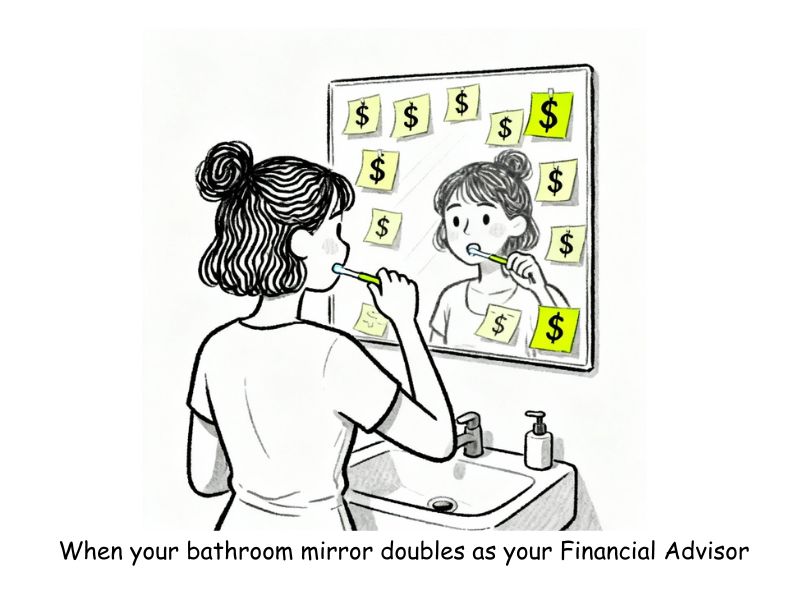
Use Visual Cues and Reminders Place reminders where you’ll see them. Put a note on your bathroom mirror about checking your balance. Set phone alerts for saving money. Use a clear jar for loose change so you can watch it grow.
Visual cues trigger the habit and keep it top of mind. The more you see reminders, the more likely you’ll follow through.
Automate What You Can Automation is your best friend for building money habits. Set up automatic transfers to savings. Schedule bill payments. Use apps that track spending automatically.
The goal is to make good financial behaviors happen without relying on memory or motivation. The less thinking required, the more consistent you’ll be.
Step 3: Stack Habits on Existing Routines
Habit stacking is one of the most effective techniques for building new behaviors. You attach your new habit to something you already do consistently.
The Power of Habit Stacking Your existing routines are already automatic. By linking new habits to them, you borrow that automaticity. It’s like getting a head start on the habit-building process.
The formula is simple: “After I [existing habit], I will [new habit].” This creates a clear trigger and makes the new behavior more likely to stick.
Examples of Financial Habit Stacking:
- After I pour my morning coffee, I will check my bank balance
- After I sit down at my desk, I will log yesterday’s expenses
- After I eat lunch, I will transfer $5 to savings
- After I brush my teeth at night, I will write down what I spent today
- After I get my paycheck, I will review my budget
The key is choosing existing habits that happen at the right time and frequency for your new financial habit.
How to Identify Good Anchor Habits Look for routines you do daily without thinking. They should happen at a time when you can easily add the financial habit. Morning routines often work well because your willpower is strongest early in the day.
Avoid anchoring to habits you’re trying to change or that happen inconsistently. You want rock-solid routines that never vary.
Step 4: Track Progress Without Getting Obsessive
Tracking keeps you accountable and motivated, but it doesn’t have to be complicated. The best tracking system is one you’ll actually use.
Simple Tracking Methods That Work Use whatever feels easiest. A simple calendar with checkmarks works fine. So does a basic smartphone note. The point isn’t perfection – it’s awareness.
Some people like detailed spreadsheets. Others prefer simple yes/no tracking. Choose what matches your personality and stick with it.
Focus on Consistency Over Perfection You’re not trying to win a perfect attendance award. You’re building long-term habits. Missing a day isn’t failure – it’s normal. What matters is getting back on track quickly.
Track your consistency percentage instead of perfect streaks. If you do your habit 80% of the time, that’s success. Perfectionism kills habits faster than anything else.
How to Recover from Missed Days When you miss a day (and you will), don’t make it worse by giving up. Simply do the habit the next day. Don’t try to make up for lost time by doing double. Just get back to your routine.
The goal is to make missed days rare exceptions, not reasons to quit entirely. One bad day doesn’t erase weeks of progress.
7 Money Habits That Actually Stick (With Examples)
Here are specific healthy money habits to start that work for real people with busy lives. Pick one or two to begin with – don’t try to do them all at once.
Daily Balance Checks Check your account balance every morning, right after you check your phone for the first time. This habit takes 30 seconds but keeps you connected to your money. You’ll catch problems early and stay aware of your spending.
This simple habit supports any budgeting method you choose. Whether you use the 50/30/20 Rule or Zero-Based Budgeting, daily balance checks keep you grounded in reality.
Automatic Savings Transfers Set up automatic transfers from checking to savings right after each paycheck. Start with a tiny amount – even $25 makes a difference. The key is automation. You can’t forget, skip, or talk yourself out of it.
This habit works perfectly with the 50/30/20 Rule, where 20% goes automatically to savings. Even if you can’t hit 20% yet, start with what you can and increase gradually.
Weekly Money Dates Schedule 30 minutes every Sunday to review your finances. Check all accounts, review spending, and plan for the upcoming week. Make it pleasant – grab your favorite coffee and treat it like self-care.
Use this time to update your Envelope System spending categories or review your Zero-Based Budget allocations. Having a regular check-in prevents small problems from becoming big ones.
Monthly Budget Reviews Once a month, do a deeper dive into your spending patterns. Look for trends, celebrate wins, and adjust your budget if needed. This isn’t about judgment – it’s about learning and improving.
This is perfect for fine-tuning your budgeting approach, whether you’re using the Envelope System for cash management or Zero-Based Budgeting for detailed planning.
Expense Tracking Write down every purchase, no matter how small. You can use an app, notebook, or phone notes. The method doesn’t matter – the awareness does. This habit reveals spending patterns you never noticed.
Expense tracking works hand-in-hand with any budgeting system. It’s essential for Zero-Based Budgeting and helps you stay within Envelope System limits.
Strategic Debt Payments Choose either the Debt Snowball Method (smallest balances first) or Debt Avalanche Method (highest interest first) and stick with it. Set up automatic payments above the minimum on your target debt.
The Snowball Method builds momentum through quick wins. The Avalanche Method saves more money on interest. Both work – pick the one that motivates you more.
Investment Contributions Start investing with any amount, even $25 per month. Use automatic transfers to make it effortless. The habit of investing matters more than the amount when you’re starting out.
Set up automatic contributions to your 401(k), IRA, or investment account. As your savings habit grows, you can increase these contributions without thinking about it.
Troubleshooting Common Problems
Even with the best system, you’ll face challenges. Here’s how to handle the most common ones.
What to Do When You Miss Days Missing days is normal, not failure. The key is getting back on track immediately. Don’t wait until Monday or next month. Just restart the next day.
If you’re missing days frequently, your habit might be too big. Scale it back until consistency feels easy, then gradually build up again.
How to Adjust Habits That Aren’t Working If a habit feels like a constant struggle after a few weeks, something needs to change. Maybe the timing is wrong, the trigger isn’t clear, or the habit is too complex.
Experiment with different approaches. Try a different time of day, a simpler version, or a different anchor habit. The right approach should feel relatively easy after the first week.
Dealing with Setbacks and Motivation Dips Motivation comes and goes – that’s why systems matter more than feelings. When motivation dips, lean on your environment and triggers. Do the bare minimum version of your habit to maintain momentum.
Remember why you started building these money habits. Focus on the progress you’ve made, not how far you still have to go. Small consistent actions always beat bursts of intense effort.
Your Next Steps: Building Money Habits That Last
You now have everything you need to build financial habits that actually stick. The framework works, but only if you use it. Here’s what to do next.
Start with one tiny habit. Pick something so small that you’d feel silly not doing it. Maybe it’s checking your balance every morning or saving $1 per day. Commit to this habit for 30 days before adding anything else.
Design your environment to support this habit. Remove friction, add visual cues, and automate what you can. Make the good choice the easy choice.
Track your progress simply. A calendar with checkmarks works fine. Focus on consistency, not perfection. Celebrate small wins along the way.
Remember: building healthy money habits to start doesn’t require perfection. It requires persistence. Every time you choose the habit over the excuse, you’re building stronger financial habits. Every small action compounds over time.
The goal isn’t to transform your finances overnight. It’s to build a system that works for months and years. Start small, stay consistent, and trust the process. Your future self will thank you for every tiny step you take today.
Good money habits aren’t built in a day, but they can start with one small action. What will your first tiny financial habit be?