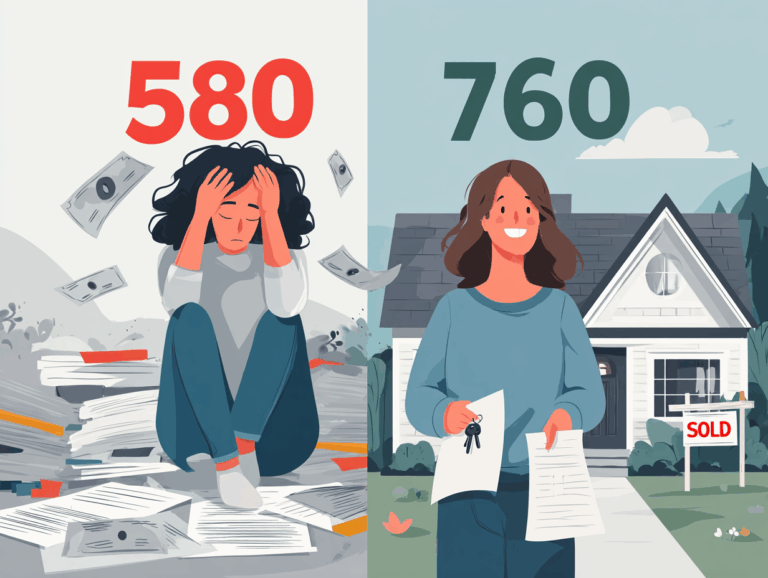
How to Build Credit with No Credit History
Starting your credit journey can feel like a catch-22. You need credit to get credit, but how do you get credit when you have none? Frustrating, isn’t it? That’s what it’s like to be “credit invisible”.
Being credit invisible isn’t the same as having bad credit. Bad credit means you’ve borrowed money and struggled to pay it back. No credit history simply means you haven’t borrowed money yet, so there’s no evidence to suggest you will or won’t pay it back.
Think of it as a blank slate rather than a black mark. You’d think that a blank slate would be viewed more favorably by lenders, but that’s rarely the case.
Why does this matter? Credit affects way more than just loans. Landlords check your credit before renting apartments. Insurance companies use it to set rates. Utility companies may require deposits without good credit. Some employers even review credit reports during hiring.
Major credit scoring models typically require several months of credit activity to establish a credit score – usually between three and six months. There’s the catch-22 again.
The good news? It is possible to build credit from scratch. It’s not even that difficult, if you know where to start. This guide will show you exactly how to do it.
Start with the Easiest Path: Become an Authorized User
Becoming an authorized user on a family member’s or friend’s credit card is one way to build credit that doesn’t involve applying for your own credit card. This is often the fastest and lowest-risk way to establish credit when you have none.
Here’s how it works: The primary cardholder adds you to their existing credit card account. You get your own card with your name on it, and the account history appears on your credit report. You benefit from their good payment history without being legally responsible for the debt.
Finding the Right Person
Ask someone you trust who has excellent credit habits. Look for these qualities in their account:
- Consistently pays on time (payment history is crucial)
- Keeps balances low (under 30% of the credit limit)
- Has had the account open for several years
- Uses the card regularly but responsibly
The Process
Most credit card companies allow adding authorized users easily. The primary cardholder simply calls their card issuer or logs into their online account to add you. Before asking a family member or friend to add you as an authorized user, it’s important to make sure that the lender reports authorized user accounts to the credit bureaus.
Risks to Consider
This strategy isn’t risk-free. If the primary cardholder starts missing payments or maxes out the card, it hurts your credit too. If the cardholder overspends or misses a payment, it will reflect poorly on your credit score. Plus, if they remove you from the account later, you could see your credit score drop.
Bottom Line
Authorized user status works best as a stepping stone. Use it to establish initial credit history, then apply for your own card within six months to build independent credit.
Your First Credit Card: Secured vs Student Cards
Once you’re ready for your own credit card, you have two main options: secured credit cards and student credit cards. Both can help you build credit from scratch, but they work differently.
Secured Credit Cards
Secured credit cards are typically easier to qualify for than traditional unsecured cards. Secured credit cards operate the same as regular credit cards but are backed by collateral. This means you need to make a security deposit with cash to open the credit card account and the lender holds on to that deposit.
How They Work
You put down a cash deposit – usually $200 to $500 – which becomes your credit limit. If you deposit $300, you get a $300 credit limit. After a period of on-time payments, a card issuer may review your account to raise your credit limit or even transfer you to an unsecured card and return your deposit.
Current Examples
Popular secured cards include the Discover it Secured and Capital One Platinum Secured. The Discover it® Secured Credit Card is one of the top secured cards on the market, earning cardholders 2% cash back at gas stations and restaurants (up to $1,000 combined each quarter,) and 1% back on all other purchases.
Pros of Secured Cards:
- Easy approval, even with no credit history
- Potential upgrade path. After a few months of responsible use, some secured cards will increase your credit limit or graduate you to an unsecured card
- Some offer rewards and have no annual fees
- You control the credit limit based on your deposit
Cons of Secured Cards:
- Ties up cash deposit. You have to come up with a lump sum of cash upfront, and you won’t get it back until you either close the account or transition to an unsecured card
- Often start with low credit limits
- May have higher interest rates than unsecured cards
Student Credit Cards
Student credit cards are unsecured cards designed for college students. Student credit cards are designed to interest students, who may have less robust credit histories and who have different financial priorities than non-student cardholders.
Who Qualifies
The basic requirements for obtaining a student credit card are as follows: The credit card applicant must be at least 18 years of age. Applicants under the age of 21 have to present proof of independent income or apply with a co-signer (if permitted)—usually a parent, guardian or working spouse—who is able to demonstrate proof of income on the application.
You’ll also need proof of college enrollment. Many student credit cards come with an explicit requirement of showing a student ID or other proof of university or community college enrollment by the primary cardmember.
Pros of Student Cards:
- No security deposit required
- Student cards, even those that let you earn rewards, often don’t have annual fees
- Often include student-friendly perks like cash back on common purchases
- Can help establish credit during college years
- Many student cards offer generous rewards. For example, your Discover It® Student Cash Back card allows you to earn 5% cash back on everyday purchases at different places you shop each quarter, up to the quarterly maximum when you activate
Cons of Student Cards:
- Independent income required. If you’re younger than 21, you must have independent income to qualify for a student card
- Can be harder to qualify for than secured cards
- Must be enrolled in college to apply
- Credit history may be required in order to qualify for some cards
Head-to-Head Comparison
| Feature | Secured Cards | Student Cards |
| Deposit Required | Yes ($200-$500) | No |
| Credit Check | Soft or none | Usually required |
| Income Requirements | Proof of ability to pay | Independent income (under 21) |
| Approval Odds | Very high | Moderate |
| Rewards | Some offer them | Often generous |
| Annual Fees | Usually none | Usually none |
| Upgrade Path | Yes, after 6+ months | Natural progression |
Which Should You Choose to Build Credit?
Go with a secured card if:
- You’re not a student
- You have cash for a deposit
- You want the highest approval odds
- You’re comfortable with lower initial limits
Choose a student card if:
- You’re enrolled in college
- You have steady income (even part-time)
- You want rewards and perks
- You prefer not to tie up cash in a deposit
Remember, you can always start with one and apply for others later as your credit improves.
Credit Builder Loans: Why We Don’t Recommend Them
The Miser’s Guide stance: Most people should skip this option.
You’ll see credit builder loans mentioned everywhere as a way to build credit. Here’s our honest take: they’re usually not worth it.
Unlike a traditional loan you can use to make a purchase, such as a car loan or mortgage, a credit-builder loan is specifically for establishing credit. The lender will hold the total loan amount in a savings account while you make payments on it. Once you’ve paid off the credit-builder loan, you receive access to the funds.
Why This Makes Little Financial Sense
Think about what you’re actually doing with a credit builder loan. You’re paying interest to access your own money. You make monthly payments on money you can’t touch, often at rates between 5% and 15% APR. Meanwhile, your deposit might earn minimal interest in their savings account.
This means you’re paying to build credit when you could build it for free or even earn rewards with the right credit card approach.
Unlike credit-builder loans, personal loans provide access to funds upfront, which you repay over time.
Alternatives to Credit Builder Loans
Instead of paying interest to build credit:
- Use a secured credit card with no annual fee (you get your deposit back)
- Become an authorized user (completely free)
- Get a student card if you qualify (no deposit required)
When It Might Make Sense
Credit builder loans could work if you’ve been denied for all credit cards and can’t become an authorized user. Even then, many credit unions offer secured cards that are better deals.
If you absolutely must consider a credit builder loan, look for these features:
- Low or no fees
- Competitive interest rates (under 8%)
- Flexible payment terms
- Reports to all three credit bureaus
Our Recommendation
Save your money. Use free or low-cost methods to build credit instead of paying interest for the privilege of accessing your own funds.
Alternative Methods for Building Credit
Beyond traditional credit products, several services can help establish credit history using bills you’re already paying.
Rent Reporting Services
Paying rent on time each month can help build your credit. Rental payments are not usually included in your credit report, so you may need to request that your landlord reports these payments through the requisite services. There are also third-party rent payment services that might report to the credit bureaus, though they may charge monthly or annual fees.
Services like RentTrack and RentKharma report rent payments to credit bureaus for a monthly fee. Some are free if your landlord participates.
Experian Boost and Bill Reporting
Experian Boost®ø can also add eligible rent, utility, insurance and other monthly payments to your Experian credit report for free, which could improve your FICO® Score. This service is completely free and can show results immediately.
Some services allow additional payments not typically included in your credit report to contribute to your score. Just make sure the cost of subscribing is worth the benefit to your credit.
Credit Monitoring and Score Tracking
Monitor your credit score with tools like Credit Karma or CreditWise from Capital One. They’re free for everyone, and using them won’t hurt your credit.
Track your progress as you build your credit. You can access your credit reports from each of the three credit bureaus for free once per year through AnnualCreditReport.com.
Cosigned Loans
If you’re having trouble getting approved for a personal loan because of a lack of credit history, you can ask someone you trust to cosign it. With a cosigner, both parties share equal responsibility for the debt, and it appears on both parties’ credit reports. However, this puts your cosigner at financial risk and should be considered carefully.
Essential Credit-Building Habits
Building credit isn’t just about getting the right products. How you use credit matters more than which cards you have.
Payment History Is King
Payment history is the most important factor in your credit score. With FICO, this is 35% of your score. With VantageScore, it’s “extremely influential.” Whatever type of credit card you’re using to build credit, focus on making on-time payments every month. Consistently making timely payments shows lenders that you’re a responsible borrower.
Set up automatic payments to never miss due dates. Even being a few days late can hurt your credit score when you’re just starting out.
Keep Utilization Under 30%
Your credit utilization, the percentage of available credit you’re using on all credit cards, plays an important role in your credit score. If you’re just starting to build credit, it’s especially important to keep an eye on your balances.
This is because you might only have one credit card with a low limit, so, even a small balance can be a large portion of your available credit. If possible, pay your balance in full each month.
For the best scores, keep utilization under 10%. Never max out your cards, even if you pay them off quickly.
Don’t Close Your First Card
The length of your credit history affects your score. Your first card helps establish this history, so keep it open even after you get better cards. This is one of many reasons that your first card should be one with no annual fee.
Monitor Your Progress Regularly
Check your credit score monthly to track improvement. Most banks and credit card companies offer free credit scores. Look for errors on your credit reports and dispute them quickly.
Watch for these positive changes:
- Your first credit score appearing (usually 3-6 months)
- Gradual score increases (10-20 points every few months)
- Credit limit increases from responsible use
Avoid Common New Credit Mistakes
Don’t apply for multiple cards at once when starting out. Each application can temporarily lower your score. Don’t use your credit card as emergency money unless you can pay it back quickly. Don’t ignore your credit – even with autopay, check statements monthly.
Timeline and Expectations
Building credit takes time, but you’ll see progress faster than you might think. Here’s what to expect during your credit-building journey.
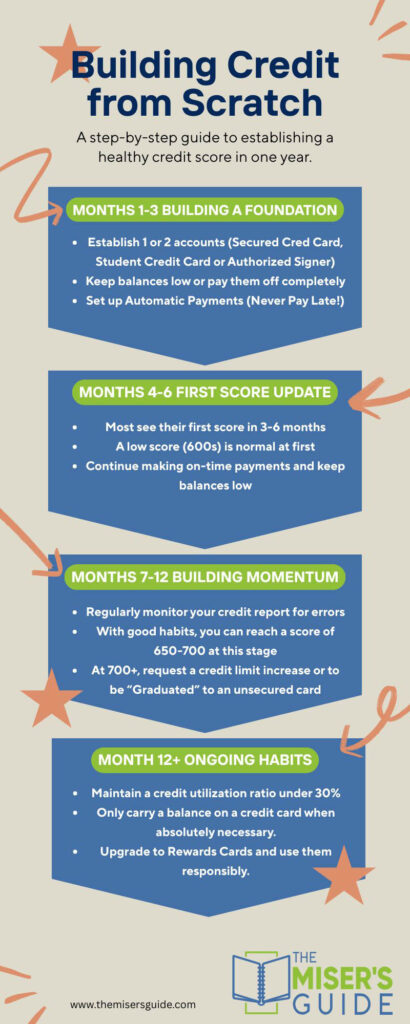
Months 1-3: The Foundation
During your first three months, focus on establishing accounts and payment history. You won’t see a credit score yet, but you’re building the foundation. Keep balances low if you can’t pay them off completely.
Late payments are always bad, but at this stage of your credit-building journey, a single late payment can seriously derail your efforts. Set up automatic payments for at least the minimum required payment so you never pay late.
If you became an authorized user, you might see a score sooner since you’re piggybacking on existing history.
Months 4-6: Your First Score
The major credit scoring models typically require several months of credit activity to establish a credit score. Most people see their first FICO or VantageScore between months 3 and 6. Don’t worry if your first score seems low (often in the 600s). This is normal for new credit users.
Continue making on-time payments and keeping balances low. Your score should start climbing steadily.
Months 7-12: Building Momentum
After 7 months, many secured card issuers begin automatic monthly account reviews to see if you qualify to upgrade to an ‘unsecured’ card. You might qualify for your first credit limit increase. Consider applying for a second card if you’ve established good habits.
Your score should be climbing toward the 650-700 range with consistent, responsible use.
12+ Months: Expanding Options
After a year of positive credit history, you’ll have access to better credit cards with rewards and higher limits. You can start shopping for cards with better terms and benefits.
Building toward excellent credit (700+) requires patience and consistency, but many people reach this milestone within 18-24 months of starting their credit journey.
Ongoing Habits:
- Make all payments on time, every time
- Keep credit utilization under 30% (ideally under 10%)
- Check your credit score monthly to track progress
- Pay balances in full when possible to avoid interest
Long-term Strategy:
- Don’t close your first credit card
- After 6-12 months, consider applying for additional credit
- Keep building positive payment history
- Stay patient – good credit takes time, but it’s worth the wait
Remember, building credit is a marathon, not a sprint. Every on-time payment moves you closer to excellent credit and better financial opportunities. Start with one method that fits your situation, stay consistent, and watch your credit score grow over the coming months.
You’ve got this. Millions of people successfully build credit from nothing every year, and you can too.