What is an FHA Loan? Complete Guide to Requirements & Benefits in 2025
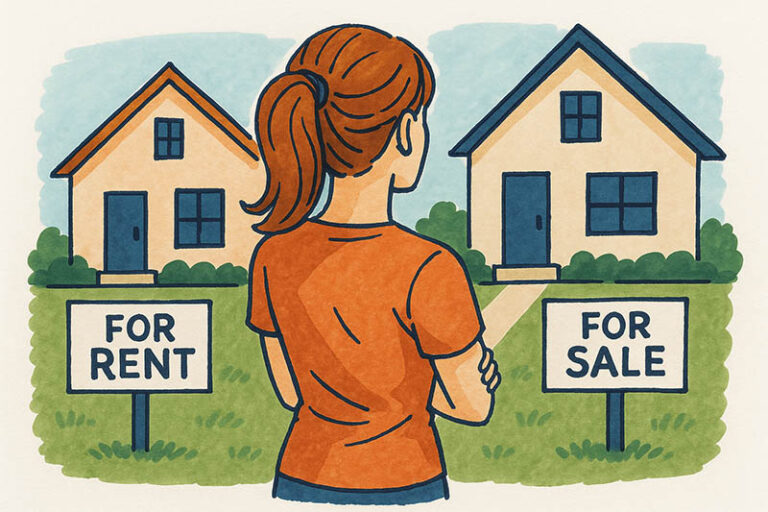
Buying a home feels impossible when every lender wants perfect credit and a huge down payment. Traditional mortgages shut out millions of Americans who earn steady paychecks but haven’t built substantial savings yet.
Enter the FHA loan. This government-backed mortgage opens doors that conventional loans keep locked tight. What is an FHA loan? It’s a home mortgage insured by the Federal Housing Administration that helps borrowers with lower credit scores or limited savings achieve homeownership.
FHA loans remove some barriers to homeownership for certain homebuyers, but that comes at a cost. We’ll get into that in more detail later.
This guide covers everything you need to know about FHA loans in 2025. We’ll explore requirements, benefits, costs, and whether an FHA loan makes sense for your situation.
What is an FHA Loan and How Does It Work?
An FHA loan is a mortgage insured by the Federal Housing Administration (FHA), a division of the U.S. Department of Housing and Urban Development (HUD). The FHA doesn’t lend money directly. Instead, they guarantee a portion of the loan to approved private lenders, like banks and credit unions.
This government backing changes everything. Lenders feel safer approving borrowers who might not qualify for conventional financing. The result? FHA loans have less strict requirements than conventional loans for credit scores, down payments, and debt-to-income ratios.
The FHA loan program launched in 1934 during the Great Depression. Its mission was simple: reduce risk for lenders and make homeownership accessible to more Americans. Nearly 90 years later, that mission continues to help families build wealth through real estate.
Perfect for those entering homeownership without substantial down payment funds.
Key FHA Loan Requirements for 2025
FHA loans have specific requirements that both you and your future home must meet. The FHA wants to ensure not only that buyers don’t get in over their heads with a mortgage, but also that the house they’re buying will remain livable throughout the life of that mortgage.
Credit Score Requirements
FHA loans accept lower credit scores than most loan programs. The minimum FICO score is 500, but your down payment requirement changes based on your score:
- Credit score 580 or higher: 3.5% minimum down payment
- Credit score 500-579: 10% minimum down payment
Remember that individual lenders often set higher credit score minimums. Shop around if your score falls near the lower end. A higher credit score also improves your interest rate and loan terms.
Down Payment Flexibility
FHA loans shine when it comes to down payments. Most borrowers qualify with just 3.5% down. On a $300,000 home, that’s only $10,500 compared to $60,000 for a conventional loan requiring 20% down.
The entire down payment can come from gifts. Family members, employers, or charitable organizations can contribute without requiring you to repay them. You’ll need a signed letter confirming the gift doesn’t require repayment. State and local down payment assistance programs also work with FHA loans.
Debt-to-Income Ratio Guidelines
FHA loans offer more flexibility with debt-to-income (DTI) ratios. Generally, a DTI of 43% or less is preferred, but it can go up to 50% or even 57% with compensating factors like excellent credit or substantial cash reserves.
For example, if you earn $5,000 monthly, FHA guidelines might allow up to $2,500 in total monthly debt payments (including your future mortgage). Conventional loans typically cap DTI at 43%.
Income and Employment Requirements
FHA loans don’t have minimum or maximum income limits. However, you must demonstrate steady income and employment history for at least two years. Recent graduates can count school time toward this requirement.
Required documentation typically includes recent pay stubs, W-2 forms from the past two years, and tax returns. Self-employed borrowers face additional documentation requirements but can still qualify.
Property Requirements and Appraisal Process
Your future home must meet the FHA’s Minimum Property Standards (MPS) for safety and livability. If you’re looking for a “Fixer-Upper”, an FHA loan probably isn’t going to work. Before this type of loan can be approved, an FHA-approved appraiser conducts a detailed inspection checking:
- Major systems (heating, electrical, plumbing) must function properly
- Exterior, foundation, and roof must be sound with at least two years of roof life remaining
- Safe road access and working utilities (gas, electricity, water, sewage)
- Proper ventilation in basements and crawl spaces without dampness or pest damage
- No wood-destroying insect infestations like termites
- Staircases must have handrails and appropriate slopes
If the home fails inspection, sellers must complete repairs before closing. This protects you from buying a home with serious issues, but it can also delay your purchase.
Occupancy and Property Type Rules
FHA loans are for primary residences only. You must move in within 60 days of closing and live there for at least one year. Eligible properties include:
- Single-family homes
- Multi-unit properties (up to four units if you live in one)
- Approved condominium units
- Manufactured homes on permanent foundations
Investment properties, vacation homes, and house flips (properties bought and sold within 90 days) don’t qualify.
FHA Loan Limits for 2025
FHA loan limits vary by location. For 2025, single-family home limits range from $524,225 in low-cost areas to $1,209,750 in high-cost areas. Alaska, Hawaii, Guam, and the U.S. Virgin Islands have even higher limits reaching $1,814,625.
Multi-family properties have higher limits. Check HUD’s website for specific limits in your area.
Understanding Mortgage Insurance Premiums (MIP)
All FHA loans require mortgage insurance premiums (MIP) regardless of your down payment size. You’ll pay two types:
Upfront Mortgage Insurance Premium (UFMIP): A one-time fee equal to 1.75% of your loan amount. On a $300,000 loan, that’s $5,250. You can pay this at closing or roll it into your loan balance.
Annual Mortgage Insurance Premium: Paid monthly and ranges from 0.15% to 0.75% of your loan amount annually. Most borrowers pay 0.55%. On a $300,000 loan, that’s $1,650 annually or $137.50 monthly.
The duration depends on your down payment:
- Less than 10% down: MIP lasts for the entire loan term
- 10% or more down: MIP cancels after 11 years
Unlike private mortgage insurance (PMI) on conventional loans, you can’t cancel FHA mortgage insurance when you reach 20% equity. Your only option is refinancing to a conventional loan.
Types of FHA Loan Programs
Beyond the standard FHA purchase loan (203(b)), several specialized programs exist:
FHA 203(k) Rehabilitation Loans: Finance both the home purchase and renovation costs in one loan. Two versions exist: standard (for improvements over $5,000) and limited (up to $35,000).
FHA Energy Efficient Mortgages (EEM): Help finance energy-saving improvements like insulation, solar panels, or efficient heating systems.
Home Equity Conversion Mortgage (HECM): Reverse mortgages for homeowners aged 62 and older.
Section 245(a) Loans: For borrowers expecting income increases, featuring graduated payment mortgages with rising monthly payments.
Disaster Victim Mortgages (203(h)): Zero down payment loans for those who lost homes in presidentially declared disasters.
Advantages of FHA Loans
Lower Down Payment Requirements: Just 3.5% down makes homeownership accessible for those with limited savings. This dramatically reduces the cash needed upfront compared to conventional loans, which typically require 20% down.
Flexible Credit Requirements: Credit scores as low as 580 (or 500 with higher down payment) open doors for borrowers with imperfect credit histories. Previous bankruptcy or foreclosure doesn’t automatically disqualify you.
Competitive Interest Rates: FHA rates often compete with or beat conventional loan rates, especially for borrowers with lower credit scores. Current FHA rates average around 6.66% as of August 2025.
Lenient Debt-to-Income Guidelines: Higher DTI ratios up to 50% or even 57% help borrowers carrying existing debt qualify for mortgages.
Gift Fund Acceptance: More flexibility in gift fund sources compared to conventional loans makes it easier for family to help with your purchase.
Not Just for First-Time Buyers: Anyone meeting requirements can use FHA loans, including repeat buyers and refinancing borrowers.
Better Financing Options: FHA-approved lenders often provide competitive rates and terms, with manufacturer incentives sometimes available.
Streamline Refinancing: FHA borrowers can refinance with reduced documentation and no appraisal through the FHA Streamline program.
Disadvantages of FHA Loans
Mandatory Mortgage Insurance: MIP adds significant cost to your monthly payments. With less than 10% down, you’ll pay MIP for the entire loan term with no cancellation option.
Upfront Costs: The 1.75% upfront premium reduces your initial equity and increases your loan balance if financed.
Higher Annual Percentage Rate: While interest rates compete well, mandatory MIP often makes the total APR higher than comparable conventional loans.
Strict Property Standards: FHA appraisals are more detailed and stringent than conventional appraisals. Required repairs can delay closing or kill deals entirely.
Seller Preferences: In competitive markets, sellers may prefer conventional loan offers to avoid FHA appraisal requirements and potential delays.
Loan Limits: Maximum loan amounts can restrict options in expensive markets. FHA doesn’t offer jumbo loan programs.
Primary Residence Only: Investment properties and vacation homes don’t qualify, limiting your real estate investment options.
Risk of Negative Equity: Low down payments combined with market fluctuations can leave you owing more than your home’s worth if you sell quickly.
One FHA Loan Rule: Generally, you can only have one FHA loan at a time with very limited exceptions.
FHA vs Conventional Loans: Key Differences
Understanding how FHA loans compare to conventional mortgages helps you choose the right option:
Government Backing: FHA loans are insured by the government; conventional loans aren’t backed by any government agency.
Credit Requirements: FHA accepts scores as low as 580 (3.5% down) or 500 (10% down). Conventional loans typically require 620 minimum.
Down Payments: FHA requires 3.5%-10%. Conventional loans start at 3% but typically require 5-20%.
Mortgage Insurance: FHA requires MIP for all loans with specific cancellation rules. Conventional PMI is required under 20% down but cancels at 20% equity.
Property Standards: FHA has stricter appraisal requirements focused on safety and livability. Conventional appraisals focus mainly on market value.
Interest Rates: FHA often offers competitive rates, especially for lower credit scores, but MIP can make the total cost higher.
Who Should Consider an FHA Loan?
FHA loans work best for specific situations:
First-Time Homebuyers with Limited Savings: Perfect for those entering homeownership without substantial down payment funds.
Borrowers with Less-Than-Perfect Credit: Offers opportunities when conventional loans aren’t available due to credit issues.
Those with Higher Debt-to-Income Ratios: More flexibility helps borrowers managing existing debt qualify for mortgages.
House Hackers: Great for buying multi-unit properties where you live in one unit and rent the others.
Future Refinance Candidates: Can serve as a stepping stone to homeownership with plans to refinance to conventional loans later.
Buyers in Competitive Markets: While sellers may prefer conventional offers, FHA loans are increasingly accepted as financing certainty becomes more important than loan type.
Current Market Conditions and Rates in 2025
FHA mortgage rates currently average 6.66% for 30-year fixed loans as of August 2025. These rates remain competitive with conventional loans and often provide better terms for borrowers with lower credit scores.
The 2025 FHA loan limits increased significantly from 2024. The floor limit rose from $498,257 to $524,225 (5.2% increase), while the ceiling reached $1,209,750. These increases reflect rising home values and improved affordability for FHA borrowers.
Interest rates will likely hold relatively steady through 2025’s remainder. While the Federal Reserve cut rates three times in late 2024, mortgage rates have remained above 6% as the housing market stays expensive with median home prices around $407,200.
Steps to Get an FHA Loan
Get Pre-Approved: Start with FHA-approved lenders to understand your buying power and strengthen your offers.
Gather Documentation: Collect pay stubs, W-2s, tax returns, bank statements, and other financial documents.
Shop for Rates: Compare offers from multiple FHA-approved lenders since rates and fees can vary.
Find a Home: Work with a real estate agent familiar with FHA requirements and potential property issues.
Order FHA Appraisal: Your lender arranges the required FHA appraisal once you have a contract.
Complete Underwriting: Provide any additional documentation requested during the approval process.
Close on Your Home: Review all documents carefully and complete your purchase.
Making Your Decision: Is an FHA Loan Right for You?
Should I buy a new or used car might be an easier question than choosing between loan types. FHA loans excel when conventional financing isn’t available or practical. They’re particularly valuable for first-time buyers, those with credit challenges, or buyers with limited savings.
Consider FHA loans when you need lower down payments, have credit scores below 620, or carry higher debt loads. However, factor in the long-term costs of mortgage insurance, especially if you plan to stay in the home for many years.
Skip FHA loans if you can qualify for conventional financing with 20% down, have excellent credit, or need to buy in high-cost areas exceeding FHA limits. The lack of mortgage insurance cancellation options makes conventional loans more cost-effective long-term for many borrowers.
Frequently Asked Questions
What is an FHA loan? An FHA loan is a mortgage insured by the Federal Housing Administration, designed to help borrowers with lower credit scores or limited down payments achieve homeownership.
Who qualifies for an FHA loan? Borrowers with credit scores as low as 500 (with 10% down) or 580 (with 3.5% down), manageable debt-to-income ratios, and steady income. Both first-time and repeat buyers qualify.
What credit score do I need for an FHA loan? The FHA minimum is 500 with 10% down or 580 with 3.5% down. Individual lenders may require higher scores.
What’s the minimum down payment for an FHA loan? 3.5% for credit scores 580 or higher, and 10% for scores between 500-579.
Are FHA loans just for first-time homebuyers? No, FHA loans are available to all qualified homebuyers, including repeat buyers and those refinancing.
Do FHA loans require mortgage insurance? Yes, all FHA loans require both upfront and monthly mortgage insurance premiums. Monthly MIP lasts 11 years with 10%+ down payment, or for the entire loan term with less than 10% down.
Why do sellers prefer conventional over FHA loans? Sellers may prefer conventional loans due to FHA’s stricter appraisal requirements that can necessitate repairs and delay closing.
The Bottom Line
FHA loans remain one of the most accessible paths to homeownership in 2025. With just 3.5% down and credit scores as low as 580, they open doors that conventional loans keep closed. However, mandatory mortgage insurance adds long-term costs that smart borrowers must consider.
How do FHA loans work in practice? They provide opportunity with trade-offs. Lower barriers to entry come with higher ongoing costs and property restrictions. For many first-time buyers and those with credit challenges, these trade-offs are worthwhile to start building equity and wealth through real estate ownership.
Before choosing any mortgage, compare your options carefully. Consider your long-term housing plans, financial goals, and ability to refinance later. The right loan depends on your unique situation, not just what’s available.
Ready to explore FHA financing? Start by getting pre-approved with multiple FHA-approved lenders to understand your options and find the best rates and terms for your situation.