When Renting is Actually Better Than Buying. (Yes, Really)
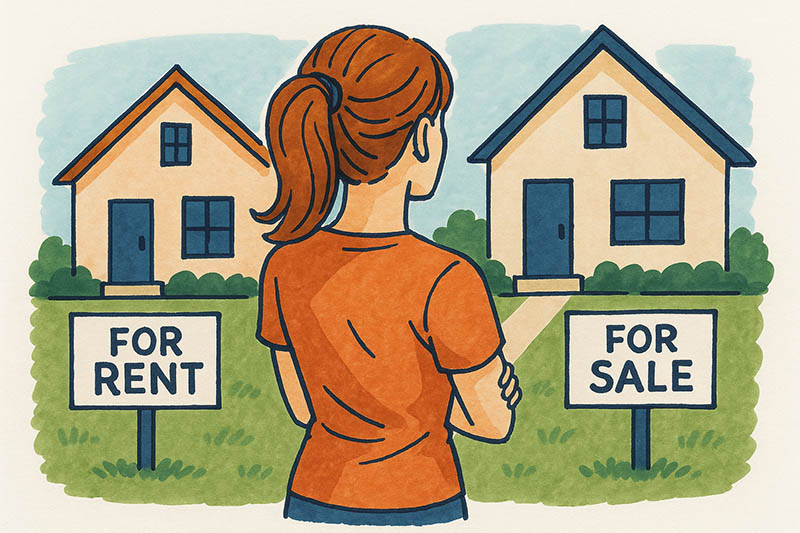
Many people think owning a home is the golden ticket. Like it’s some big goal everyone should chase. But here’s the thing: renting can actually be a very smart financial choice, especially right now.
This isn’t about settling for less. It’s about making the smartest move with your money. We’ll explore when renting makes more sense than buying. Plus, we’ll show you the real costs of both options.
Key Takeaways
- Renting saves money upfront – No massive down payment or closing costs needed
- Lower monthly costs nationwide – Renting costs 38% less than mortgage payments in 2025
- No surprise repair bills – Your landlord handles all maintenance and fixes
- Complete flexibility – Move easily for jobs or life changes without selling hassles
- Investment opportunity – Use saved money to build wealth in stocks or other investments
- Price-to-rent ratios favor renters – Most major cities show renting is cheaper than buying
What People Often Get Wrong About Renting vs Buying
Myth #1: Renting is “Throwing Money Away”
This old saying needs to die. When you rent, you’re paying for a roof over your head. You get a place to live, sleep, and store your stuff.
Think of it like eating at a restaurant. You don’t “own” the food after you eat it. But you got value for your money. Same with rent – you’re buying housing services.
Your rent vs buy 2025 decision shouldn’t be based on outdated thinking. Renting has increasingly become a more attractive option for young Americans who have been wrestling with an unaffordable housing market over the last few years.
Myth #2: Buying a Home Always Builds Wealth Faster
Wrong again. Buying comes with tons of hidden costs that eat your money. Property taxes, insurance, maintenance, and mortgage payments add up fast.
Meanwhile, money you save by renting vs buying can go into investments. Stocks, bonds, or index funds often grow wealth faster than real estate. This is called opportunity cost – what your money could earn elsewhere.
Top Reasons Why Renting Can Be Better Than Buying
Less Money Needed Upfront
Renting: You usually need just one month’s security deposit. Often, you get this money back when you move out.
Buying: You need a massive down payment (ideally 20% of the home prices) plus closing costs (2% to 6% of the loan). This can mean $50,000 to $100,000 upfront for a typical home.
No Surprise Repair Bills
Renting: Something breaks? Call your landlord. They handle repairs and pay the bills. Your washing machine dies? Not your problem.
Buying: Every repair, replacement, and renovation comes out of your pocket. Experts say to budget 1% to 4% of your home’s value yearly for maintenance. On a $400,000 house, that’s $4,000 to $16,000 per year.
No Property Taxes or HOA Fees
Renting: You don’t pay property taxes. These can cost thousands yearly for homeowners.
Buying: Property taxes never go away. Plus, many homes have HOA fees – sometimes $200 to $500 monthly for condos or planned communities.
More Freedom to Move
Renting: When your lease ends, you can move anywhere. New job in another city? No problem. Want a change of scenery? Easy.
Buying: Selling a home is complicated and expensive. Realtor fees, closing costs, and repairs can eat 6% to 10% of your home’s value. Moving becomes a major financial decision.
Lower Ongoing Costs
Insurance: Renters insurance costs about $23 monthly. The average renters insurance policy costs $19 a month. Homeowners insurance can cost $100 to $300 monthly.
Utilities: Rental units are often smaller and more efficient. Lower heating and cooling bills save you hundreds yearly.
Invest Your Savings Instead
Here’s where renting better than buying really shines. Take that down payment money and invest it. Put your monthly savings (rent vs mortgage difference) into index funds.
Over time, these investments can build more wealth than home equity. The stock market has averaged about 10% returns over decades. Many housing markets don’t beat that.
When Renting Makes Financial Sense (and Where!)
In Most Big Cities, Renting is Cheaper
The numbers don’t lie. On average, renting a home is cheaper than paying a mortgage in all 50 of the largest U.S. metros in 2025 — with the cost difference between the two growing in 38 metros since last year.
San Francisco: It costs almost 191 percent more per month to pay a mortgage than to rent in San Francisco, according to Bankrate’s latest estimates. That’s nearly three times more expensive to buy!
National average: Nationally, an average mortgage payment costs 38 percent more per month compared to average rent. Buying a home now costs about 38% more than renting.
Cities where renting vs buying clearly favors renting include:
- San Jose (190%+ more to buy)
- Seattle (major cost gap)
- Austin (significant monthly difference)
- Most California metros
The rental market has stayed stable while mortgage payments have skyrocketed due to higher interest rates.
If You Don’t Plan to Stay Long
Should I rent or buy? Depends on how long you’ll stay. Buying only makes sense if you’ll live there 5 to 10 years minimum.
This is because of transaction costs. Buying and selling a home involves realtor fees, closing costs, inspections, and more. It takes time to “break even” on these expenses.
If you might move for work, family, or adventure, renting wins every time.
When Property Values Might Drop
Home prices go up and down. If you own and values drop, you could lose money when selling. Some people end up “underwater” – owing more than their home is worth.
Renters avoid this risk completely. Market crashes don’t affect your housing situation when you rent.
How to Figure Out What’s Best for You
Look at the “Price-to-Rent Ratio”
This simple number compares buying costs to renting costs in your area. It is calculated by dividing the median home price by the annual rent.
What the ratios mean:
- 15 or less: Buying might be cheaper
- 15 to 20: It’s a toss-up – analyze your situation
- 21 or higher: Renting is likely better
Among the 50 most populous U.S. metros, San Jose has the highest price-to-rent ratio at 37.6, while Cleveland has the lowest at 11.
Cities with high ratios (where renting is better than buying):
- San Jose: 37.6 ratio
- San Francisco: 36+ ratio
- Seattle: 36+ ratio
Cities with low ratios (where buying might win):
- Cleveland: 11 ratio
- Pittsburgh: Low ratio
- Many Rust Belt cities
Use a Rent vs. Buy Calculator
Online tools help you compare all costs side-by-side. Bankrate has a very helpful tool. Make sure to include:
For buying:
- Mortgage payment (principal and interest)
- Property taxes
- Homeowners insurance
- PMI (if less than 20% down)
- Maintenance costs (1-4% of home value yearly)
- HOA fees
- Closing costs
- Opportunity cost of down payment
For renting:
- Monthly rent
- Renters insurance
- Moving costs
- Potential for rent increases
Don’t just compare mortgage payment to rent. That’s missing half the picture.
Think About Your Life Goals
Money isn’t everything. Consider:
Job stability: Secure job with no plans to move? Buying might work. Career uncertainty or potential relocations? Renting offers flexibility.
Family plans: Planning kids or major life changes? Renting lets you adjust housing needs easily.
Lifestyle preferences: Love DIY projects and want complete control? Buying appeals to you. Prefer someone else handles maintenance? Renting is perfect.
Financial goals: Want to travel, start a business, or invest elsewhere? Renting frees up cash for these goals.
The Real Numbers: Why Renting Wins in 2025
Current market data shows just how much when is renting better than buying applies right now:
Monthly costs: The average monthly mortgage payment for a median-priced home ($425,583, per Redfin) in the United States, including average property taxes and homeowners insurance, rose 2.4% year over year to $2,768 as of February 2025.
Compare that to: The average national monthly rent came in around $2,000 in February 2025 after accounting for monthly renters insurance and adjusting for inflation, down less than two percentage points since last year.
That’s a $768 monthly difference – nearly $9,200 per year!
Investment opportunity: Take that $768 monthly savings plus your would-be down payment. Invest it in index funds averaging 7-10% returns. Over 10 years, you could build serious wealth.
Latest data shows renting saves homeowners $27,648 over three years in 2025. That’s real money you can use for other financial goals.
Smart Renters Are Building More Wealth
Here’s something interesting: Paul Leara, a 31-year-old mortgage broker based in Birmingham, Alabama, may help people secure mortgages every day, but he has been a loyal renter for the last decade. Leara likes that renting allows for more flexibility and has lower upfront costs. Without a down payment or closing costs, he has been able to keep more of his cash on hand and invest what he would’ve put toward a house in the stock market.
This mortgage broker – who knows the home buying business inside and out – chooses to rent. Why? Because renting vs buying math favors investing that money elsewhere.
Think about it: Instead of tying up $60,000 in a down payment, you invest it. Instead of spending extra monthly on mortgage payments, taxes, and maintenance, you invest that difference too.
Over 20 years, this strategy often builds more wealth than homeownership.
The Bottom Line: Make the Smart Choice for YOU
Renting is not “throwing money away.” In 2025’s market, it’s often the smarter financial move. High home prices, expensive mortgage payments, and limited inventory make when renting is cheaper than buying very common.
The key is looking at your personal situation:
- How long will you stay?
- Can you afford the true costs of ownership?
- Do you value flexibility over stability?
- Are there better places for your money?
Reasons to rent instead of buy 2025:
- Massive upfront savings (no down payment or closing costs)
- Lower monthly costs in most cities
- No maintenance headaches or surprise bills
- Complete flexibility to move
- Opportunity to invest savings for potentially higher returns
- No market risk if property values drop
Think of housing like transportation. Some people lease cars because they want lower payments, newer features, and flexibility to change vehicles. Others buy because they want ownership and don’t mind higher costs.
Neither choice is right or wrong. It depends on your goals, finances, and lifestyle.
Why renting makes sense financially often comes down to opportunity cost. Every dollar you don’t spend on down payments, mortgage payments, taxes, and maintenance can go toward building wealth elsewhere.
The cost comparison renting vs buying clearly shows that 2025 favors renters in most markets. Don’t let old financial advice from different market conditions drive your decision.
Whether you rent or buy, make sure it fits your situation. But don’t assume buying is automatically better. In today’s market, when is renting better than buying might be right now, for you.
The American dream isn’t about homeownership – it’s about financial freedom. Sometimes renting gets you there faster.