The Real Cost of Food Delivery: I Priced the Same Meal 4 Ways
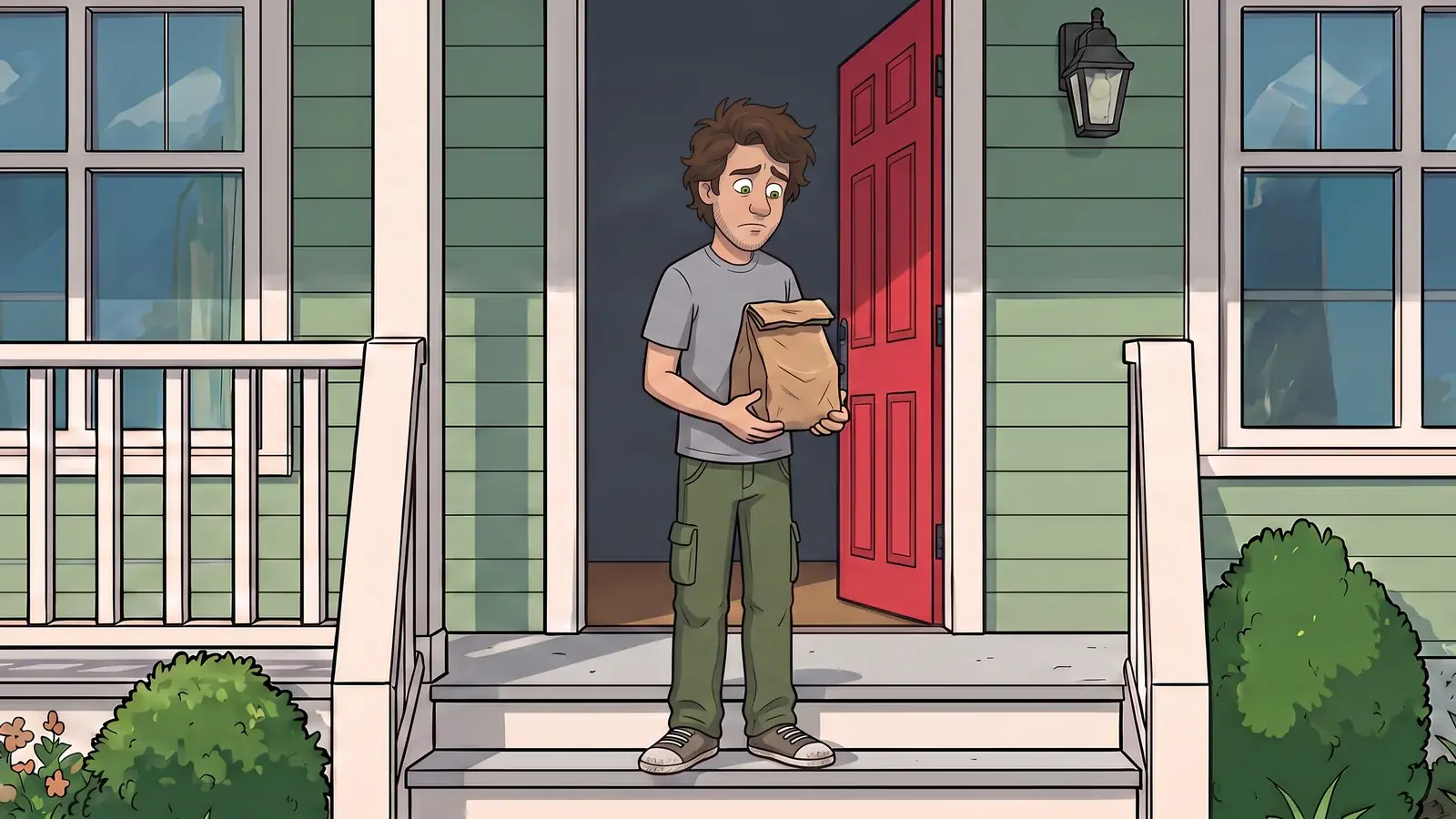
My wife and I both work full-time and have other projects. We don’t have much time for meal planning with 3 kids. It’s tough, but the law says we have to feed them.
I’m joking, of course, but there’s no getting around the stress of meal planning for a family of 5. The occasional takeout or delivery order can go a long way toward saving one’s sanity. But it ain’t cheap.
You already knew that. Everyone knows that. But have you ever taken a close look at why food delivery has gotten ridiculously expensive?
I did. I priced the same Subway meal for my family four different ways. Made at home, it came to $48. Delivered through DoorDash, it came to $105. Same sandwich, same chips, same soda.
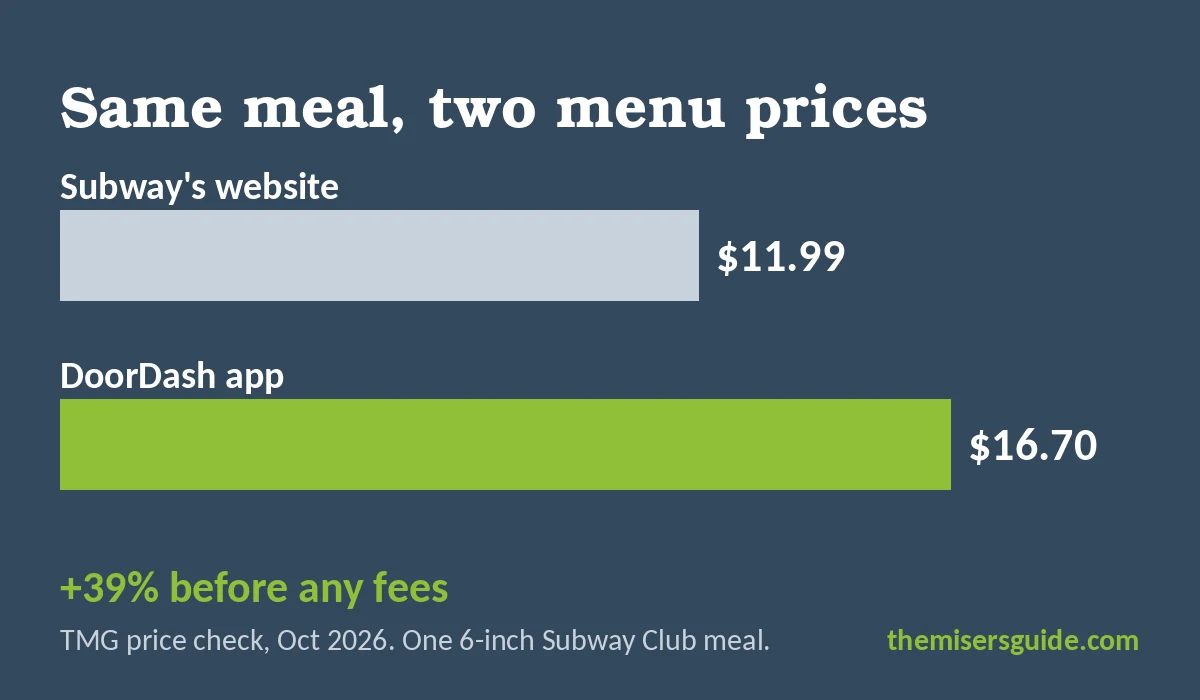
And the real cost of food delivery starts before a single fee. In my test, the menu price itself was 39% higher on the app than on Subway’s own website.
So I’m not going to tell you to quit takeout. I want to show you where the extra money goes and how to keep more of it.
Key takeaways
- Delivery apps let restaurants charge more for the same food. In my test, the markup was $4.71 on one meal before any fees.
- “Free delivery” on bigger orders can just move the cost into a larger service fee.
- Ordering pickup straight from the restaurant’s own website was $17.68 cheaper than the same pickup order through the app.
I priced one Subway meal four ways, and I kept the test fair
Before I compared a single price, I set a few rules.
I picked the restaurant closest to home, so delivery distance couldn’t skew the numbers. I picked a meal that’s easy to make yourself, so cooking time wouldn’t tip the scale either. Subway checked both boxes. The grocery store I priced ingredients at sits in the same shopping center.
The meal: a 6-inch Subway Club with American cheese, lettuce, tomato, red onion and mayo, plus chips and a bottled Diet Pepsi. I chose one that wasn’t part of any online promotion, so near as I can tell, the website price is the everyday price.
Then I priced it four ways, for one person and for five:
- Made at home
- Pickup, ordered on Subway’s own website
- Pickup, ordered through the DoorDash app
- Delivery through DoorDash
Did I actually order all of this food? No. Every number below comes straight from the checkout pages before I hit “place order.” They’re real prices, as of October 2026. And for the record, The Miser’s Guide isn’t affiliated with or paid by Subway, DoorDash or Uber Eats.
Why is DoorDash more expensive? The markup starts on the menu
Part of the answer is the menu price itself. Most people blame the fees. Delivery fee, service fee, tip. Those add up, and we’ll get to them.
But the first markup showed up before any of that. On Subway’s website, the meal was $11.99. On DoorDash, the same meal was $16.70. That’s 39% more for the exact same food, and checkout hadn’t even started.
Switching to pickup inside the app didn’t change it. The menu price was still $16.70.
My test isn’t a one-off. Truth in Advertising, a consumer watchdog, found a Wendy’s combo on DoorDash priced 25% higher for delivery than for pickup. The same investigation found the app does tell you prices may differ. The note is just tucked behind a small icon or at the bottom of a long menu.
Now look at it from the other side of the counter. Delivery apps let restaurants set their own menu prices. DoorDash even lets them set one price for pickup and another for delivery. Its merchant pricing page offers restaurants a 6% commission on pickup orders, with a condition in the fine print: their pickup menu prices have to match in-store prices. Matching is rewarded. It isn’t required.
Uber Eats works the same way. Restaurants set their own menu prices there, too.
And the menu markup was only the first layer.
For a family of five, the same meal ran from $48 to $105
| How I got it | Total for 5 meals |
|---|---|
| Made at home | $48.17 |
| Pickup, Subway’s website | $70.00 |
| Pickup, DoorDash app | $87.68 |
| Delivery, DoorDash | $105.14 |
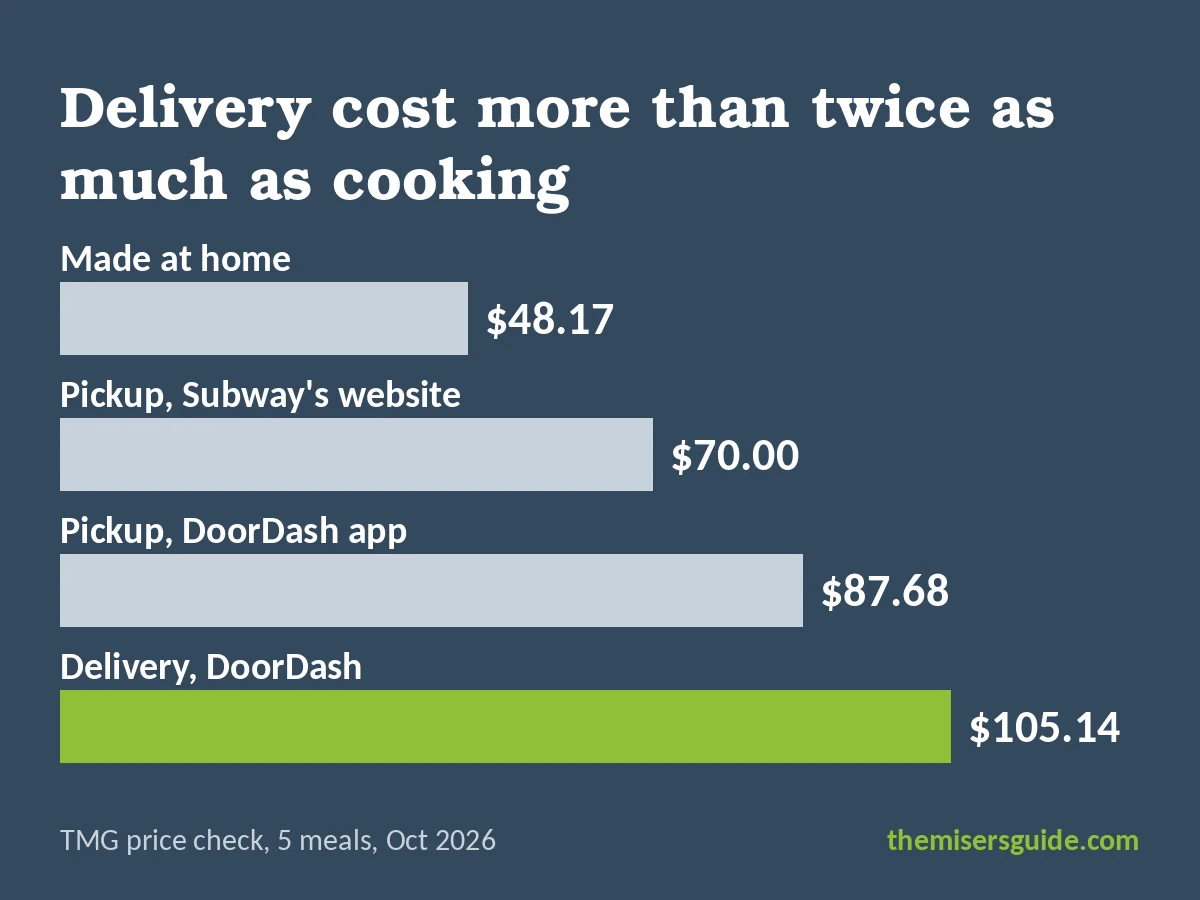
Making it at home came to $48.17, and that assumes an empty pantry. I priced every ingredient, mayo included, plus a family-size bag of the same chips and a 6-pack of the same soda. There was enough left over for a sixth meal.
Picking up five meals ordered on Subway’s website cost $70. That’s not unreasonable, but it’s a big jump from $48. And that $70 included a $6 tip.
The same pickup ordered through the DoorDash app? $87.68, with no tip. That’s $17.68 more to pick up the same food, at the same counter, at the same time.
Then there’s delivery, which is where it really got ugly. It rang in at a whopping $105.14 after fees and tip. More than twice the cost of making it yourself.
My results line up with a bigger study. In a 2025 analysis, LendingTree found delivery averaged 79.5% more than pickup. For a single meal in my test, delivery ($26.24) cost 87% more than pickup from Subway’s website ($14).
Your “free delivery” moved to the service fee
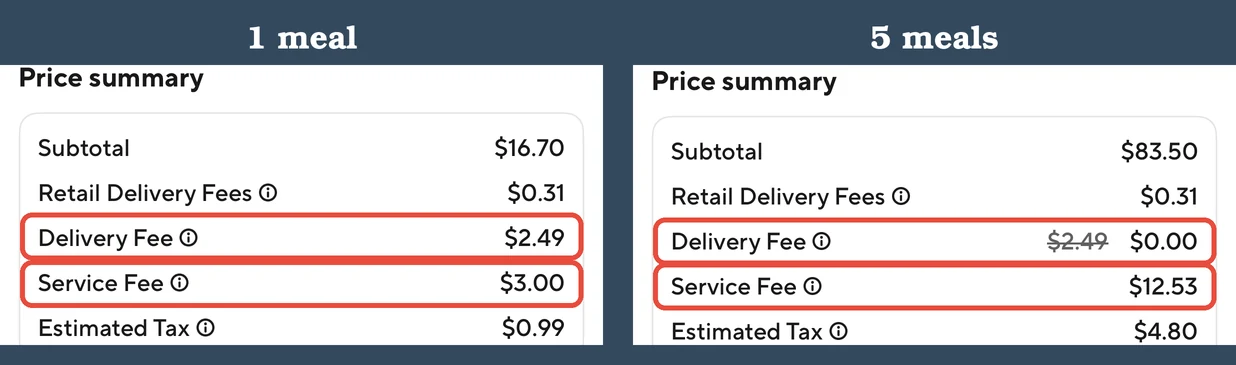
On one meal, DoorDash charged a $2.49 delivery fee and a $3 service fee.
On five meals, the delivery fee disappeared. It’s waived on orders over $20. Free delivery, right?
Not quite. The service fee jumped from $3 to $12.53, which is 15% of the food. Bigger order, bigger fee. The delivery charge didn’t go away. It just moved to another line.
One more thing. In many states, including mine, the fees get taxed. Same food, and the tax on delivery came out higher than on pickup.
The tip isn’t the problem
On the delivery orders, I tipped $2.75 for one meal and $4 for five. That’s how your driver gets paid. It’s the only reason they’re delivering in the first place, and they earned it.
If you’re trying to cut the cost of takeout, the tip is the wrong place to start. The part worth a second look is the menu price you didn’t know had changed.
Ordering in became a habit, and the habit stuck
If it feels like everyone orders in now, the numbers back you up. In the third quarter of 2026 alone, DoorDash handled 993 million orders, 28% more than a year earlier.
The pandemic gave the habit a push, and it never really went away. USDA researchers found that app spending on fast-food carryout and delivery peaked at $4.4 billion over three months in 2021. By the end of 2022, it was still running about $3.9 billion.
And plenty of us order often. In LendingTree’s survey, 38% of Americans said they order delivery every week. In a 2023 LendingTree survey of people who use on-demand delivery of any kind (food, groceries, retail), 44% admitted to spending more than they can afford on it.
None of that makes anyone bad with money. Busy weeks are real. But a markup you don’t see is easy to pay every week without noticing.
A weekly delivery habit can cost almost $3,000 a year
Say your family orders delivery once a week instead of picking up from the restaurant’s own website. Using my numbers, that’s $35.14 more each week. Over 52 weeks, it adds up to $1,827.28.
Compared with making it at home, the gap is $56.97 a week. That’s $2,962.44 a year.
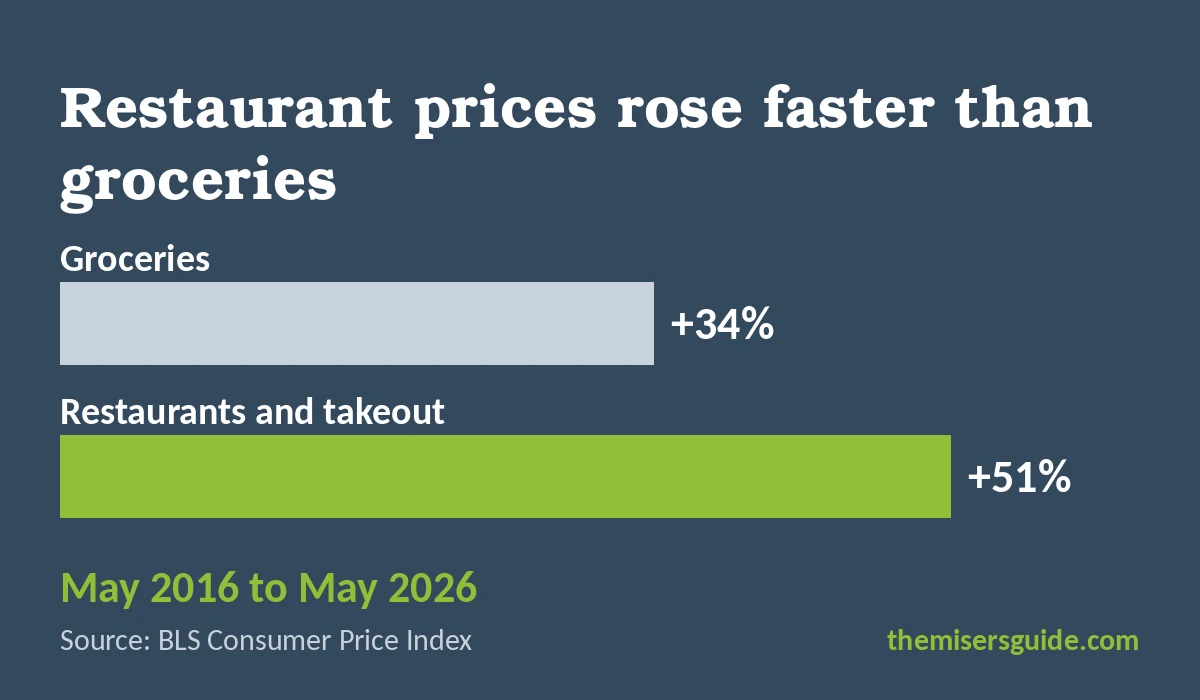
And the gap keeps growing. Over the 10 years from May 2016 to May 2026, grocery prices rose about 34% while restaurant and takeout prices rose about 51%, based on Bureau of Labor Statistics data. In the most recent 12 months, grocery prices rose 1.8% and restaurant prices rose 3.5%, according to the BLS (as of September 2026). Eating out is getting pricier almost twice as fast as cooking.
How to keep takeout and skip the markup
You don’t have to give up takeout. Some nights, it’s the right call. A few small moves keep it from costing half again as much.
Check the restaurant’s own website first, or call. In my test, ordering pickup directly saved $17.68 over the same pickup order in the app.
On the app, toggle between pickup and delivery before you check out. Compare the food prices, not just the fees. Some restaurants charge more for the same item when it’s delivered.
Put any delivery membership to the test. If you pay monthly for an app’s perks, check whether you order enough to make it worth it. Our subscription audit guide walks you through it.
Cook once, eat twice. Double a recipe that freezes well. Future you gets a ready-made dinner on one of those busy nights when the delivery app looks tempting. And even with grocery prices where they are, cooking at home is still the cheapest way to eat. Our guide to saving money at the grocery store can help with that side of the bill.
Before your next order, check the restaurant’s own price
Next time you’re about to tap “place order,” pause. Open the restaurant’s own website and compare it to the app. It only takes a minute.
And the cheapest meal on our list? Still the one you make yourself.
This content is for educational purposes only. It is not personalized financial advice. Consult a qualified financial advisor before making financial decisions.